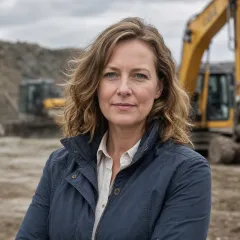
Here's the call I get more often than I'd like to admit:
The machine stopped producing blocks. It's a hydraulic brick making machine. The site is waiting. What do we replace?
The caller expects a part number. Sometimes it is that simple. But most of the time, the machine is the symptom, not the disease. The equipment that went down suddenly was made fragile somewhere upstream—usually before it even arrived at the site.
I work in after-sales support for a global construction equipment manufacturer. In that role, I've coordinated more than 200 emergency machine calls in the past five years. When I triage a machine emergency, I start with three questions: How much time do we have? Is a repair physically possible inside that window? And what is the worst case if we guess wrong? Those same questions should be asked before anyone signs for a block machine.
I am not a materials engineer or a chemist. I can't give you a mix design formula. What I can tell you is where block machine projects fail from a parts and support perspective, and why almost all of it is predictable.
The surface problem: names do too much work
Search hydraulic brick making machine and you'll see trailer-mounted hydraulic presses, stationary four-column presses, and automated plants. Same search result, different processes. The name tells you how pressure is applied. It does not tell you what raw material the machine can handle, what block size it will make, what power it needs, or whether it can handle your clay.
The phrase efficient automatic brick making machine sounds like one usable category. The reality is less convenient. Automatic often means the press cycle is automated: material in, block out. The steps around it—batching, moisture control, screening, curing, stacking—may still be manual. An automatic machine in a disconnected process is simply a faster bottleneck.
Then there are the mobility words. Factory mobile block making machine and concrete mobile block making machine are attractive because they promise the plant can move to the job. In practice, movement usually ends at the machine. The curing yard does not move. Neither do the cement storage, aggregate stockpile, or the water source.
And before I forget: I have nothing against a manual clay block making machine. It is simple, inexpensive, and often the right choice for compressed-earth projects with available labour and modest output. But it is not an automatic machine's small brother. It is a different production model. Comparing those by price per block misses the real question—what will the production system look like after the machine arrives?
The deeper issue: material decides the machine
Let me rephrase that. The raw material and the final block decide the machine. The machine is selected after those are known. When people reverse that order, the emergency call follows later.
Clay and concrete are not interchangeable. A hydraulic brick making machine built for interlocking soil-cement blocks compresses screened soil stabilized with cement or lime. A concrete masonry machine is usually dry-cast: low water, high compaction pressure or vibration, dense mix, then a curing cycle. The machines can look similar, but mold geometry, force curve, and feeding systems are different. If you try to make one perform the other's job, the output crumbles, laminates, or lacks strength.
A manual clay block making machine may be perfect for pressing earth blocks on site. But if a supplier tells you it can be upgraded to a real concrete block machine with a more powerful hydraulic cylinder, ask for test blocks made with your material first.
Material nuance extends to the same label. I keep seeing buyers pick a hydraulic brick making machine based on demo videos made with perfect sand and cement. Production material contains natural variation: too many fines, not enough consistency, changing moisture. The machine cannot correct an inconsistent feed.
There's also the support issue. The same machine might handle river sand perfectly, but if your site only has crushed limestone dust or high-clay soil, the output changes. That is not a manufacturing problem; it is a process-matching problem. You can avoid it by doing one test with your actual material before you pay the balance.
This gets into mix design territory, which isn't my expertise. What I can say is that after a machine produces weak blocks, the first question should be about material preparation—not the PLC, not the valve. If the material is wrong, no control screen setting can fix it.
Rated capacity is an optimistic number
On paper, an efficient automatic brick making machine can seem like an obvious buy: high output per hour and low labour per block. But the rated output is measured under fixed conditions. By the time real material, manual batching, weather and operator breaks enter the picture, actual production can be well below the brochure number.
I've seen customers plan schedules using a machine's theoretical cycle time. Then a wet season arrives and the soil moisture content changes. The block presses fine but cures poorly. The machine is still hitting its cycle. The process isn't. What looked like a 4,000-block day turns into a 1,200-block day when you count cracked blocks. That's why I always ask about curing capacity before output capacity.
For concrete products, the curing environment is not optional. In North America, a load-bearing concrete block typically has to meet a standard such as ASTM C90. That standard is not met by pressing alone; it is met by mix design, forming, curing, and testing. A mobile block machine can form blocks quickly. If those blocks are stacked on wet ground or rained on before they gain strength, the machine wasn't the problem.
What this mismatch costs in real life
The frustrating part for me is not that machines fail. It's that the failure was priced into someone else's assumptions.
In February 2024, I was coordinating an urgent replacement part for an automatic block machine. A pressure relief valve had failed. The part was about $450. The customer had declined the spare when it was offered because the machine was new. With a deadline 36 hours away and the nearest stocked warehouse 600 miles away, the customer paid an additional $2,300 for emergency overnight freight. The part arrived, but the machine missed the shift by eight hours.
Was that a mechanical failure? Technically. But the real failure was the decision to buy a machine without planning for maintenance. The replacement part existed. The plan did not.
More common for hydraulic brick making machine is the material mismatch. A buyer selects a machine for one product, discovers the feedstock is not compatible, and then tries to solve it with new tooling or a bigger motor. The machine can't fix what was wrong upstream. Meanwhile, the project timeline keeps moving. The cost of delays, rework, extra freight and lost credibility is often larger than the machine itself.
I've never seen a well-tested material and a defined curing process destroy a project. I've seen pretty brochures do it.
That's the honest version.
A shorter solution: fix the process, not the emergency
I'm not suggesting you need a complicated engineering study for every small brick plant. I am suggesting that machine selection should be treated as production design.
- Test your actual material before buying. Ask the manufacturer to run your soil, sand or aggregate through the machine.
- Map the process from raw material to cured block. Identify which steps are still manual and what happens in rain.
- Buy the critical spares before you need them. The cost of financing a few wear parts is tiny compared with emergency freight and stopped production.
If the project is high-volume and continuous, the efficient automatic brick making machine is likely worth the investment. If the material is local clay, the labour pool is available, and the output target is small, a manual clay block making machine can be the right production tool. If you need dense interlocking blocks at medium volume, a hydraulic brick making machine makes sense. If your projects move often, a factory mobile or concrete mobile block making machine reduces transport of finished blocks.
But notice what happens in every scenario: production conditions make the decision. The machine only works within the process that feeds it, supports it, and cures its output.
Bottom line: when someone asks for a hydraulic brick making machine, the better question is what kind of production system they need. Answer that first. Then the machine becomes easier to choose—and less likely to become the emergency.
This reflects what I've seen through early 2025. Product lines change, standards update, and machine configurations vary. Verify current specifications and local standards with your supplier and engineering advisor before you commit.