The Questions I Actually Get Asked (And The Real Answers)
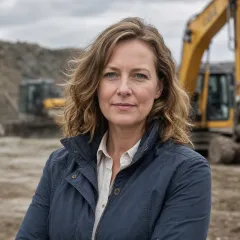
I'm a procurement manager at a 150-person construction firm. I've managed our heavy equipment and fleet budget (about $180,000 annually) for over 6 years, negotiated with 50+ vendors, and tracked every single invoice. I'm not a salesperson. I'm the person who has to explain budget overruns to the CFO.
Here are the questions my colleagues and peers actually ask me—not the marketing fluff, but the stuff that impacts the bottom line.
1. "Is SANY equipment cheaper to own than, say, Caterpillar or Komatsu?"
Honestly, that's the wrong first question. The right question is: "What's the total cost of ownership (TCO) for my specific use case?"
I assumed "cheaper sticker price" meant lower overall cost. Didn't verify. Turned out, that's a surface illusion. From the outside, it looks like you're comparing two excavators. The reality is you're comparing two systems: parts availability, local dealer support, resale value, and fuel efficiency over 10,000 hours.
For example, a SANY 750 excavator might have a compelling upfront price. But if the nearest certified technician is 200 miles away, your downtime costs during repairs will eat that initial savings. I learned this the hard way after a "cheap" purchase cost us $1,200 in extra transport and labor fees for a simple repair. After comparing 8 vendors over 3 months using our TCO spreadsheet, I now look at dealer proximity and parts inventory first.
According to industry analyses from sources like Equipment World, TCO calculations should factor in depreciation, financing, maintenance, downtime, and fuel for a minimum 5-year period. A lower-priced unit with higher fuel consumption can be more expensive in the long run.
2. "What's the deal with the 'Willow Pump'? I see it mentioned with SANY concrete gear."
This is a great example of a specification trap. "Willow Pump" isn't a standard industry term you'll find in a spec sheet from Caterpillar or Putzmeister. It's more of a model nickname or a regional term for a specific pump configuration (often a smaller, more maneuverable trailer-mounted pump).
People assume a model name means standardized features. What they don't see is that one vendor's "Willow Pump" might have a different engine, max pressure, or valve system than another's. When I audited our 2023 spending, I found we paid 15% more for a pump because we quoted on the nickname, not the detailed technical specs. Our procurement policy now requires quotes to list exact model numbers, engine HP, output capacity (cubic yards/hour), and max pressure.
The lesson? Never quote on nicknames. Always get the full technical data sheet and compare those. If a vendor can't provide it, that's a red flag.
3. "Okay, but what about a 'SANY Crane TX'? Is it good for tight urban sites?"
This gets to the heart of "expertise boundary." I'm a cost guy, not a certified crane operator or engineer. My role is to facilitate the experts.
Here's my process: When a project manager asks about a specific model like a crane for a tight site, I don't give a thumbs up/down. I compile the specs (reach, lift capacity at various radii, footprint dimensions, setup time) and the TCO data from the dealer. Then, I present that package along with 2-3 competitive quotes for similar models to our lead equipment operator and site superintendent. They're the ones who know if it'll actually fit and work.
The vendor who said, "Our TX model is strong on lift, but if your access is under 10 feet, our TR model might be better—here are the specs for both," earned my trust. I'd rather work with a specialist who knows their limits than a generalist who overpromises.
4. "How do I get a forklift certification, and is it a budget item?"
This is one of those hidden costs companies forget to budget for. It's not just the cost of the course; it's the cost of the employee's time.
According to OSHA standards (29 CFR 1910.178), employers must ensure forklift operators are trained and certified. The training itself can cost $250-$500 per person. But the real cost? That's 1-2 days of lost productivity. For a crew making $40/hour, that's $640 in wages for an 8-hour day, plus the course fee.
We didn't have a formal certification tracking process. It cost us when OSHA did a spot check and we had an operator with an expired cert. The fine was $1,500 (per violation, thankfully just one). The third time we scrambled to renew a cert last-minute, I finally created a calendar system to track renewals 60 days out. Should've done it after the first time.
Budget for both the course fee and 16 hours of labor per operator per certification cycle (typically 3 years). It's cheaper than the fine and the potential accident liability.
5. "Wait, 'bucket hat'? Is that some new safety gear?"
(I had to include this because I get it in searches all the time! It's a funny one.) No, it's not PPE. A "bucket hat" is literally the hat you wear to keep the sun off your neck. I think it pops up in equipment searches because people are typing "bucket" (as in excavator bucket) and "hat" gets added.
But since we're here, let's talk about ancillary gear costs. This is a tiny example of a big principle: small, recurring purchases add up. We didn't track small items like gloves, hats, and safety glasses. They were just expensed. When I analyzed $180,000 in cumulative spending across 6 years, I found we spent nearly $8,400 annually—that's 17% of our consumables budget—on small, un-bid items bought locally at markup.
We switched to a bulk purchasing agreement with a single safety supplier for these items and saved $2,800 a year. The "bucket hat" taught me to track everything.
6. "What's the one thing you wish you knew before buying heavy equipment?"
It took me 3 years and about 150 orders to understand this: The relationship with your local dealer is more important than the global brand.
A premium brand with a terrible, slow, or dishonest local dealer is a nightmare. A "value" brand with an incredible, responsive, well-stocked local dealer can be a dream. That local dealer is your lifeline for parts, warranty service, and technical support. A good dealer will also give you honest advice about when to repair vs. replace, which saves you money.
My final piece of advice? Always calculate Total Cost of Ownership, not just purchase price. And build a relationship with a dealer who acts like a partner, not just a vendor. That's what actually controls costs in the long run.
Note: All prices and costs mentioned are based on my company's experience and market research circa 2023-2024. Equipment pricing, shipping times, and regulations change—always verify with current quotes and official sources like OSHA.gov.